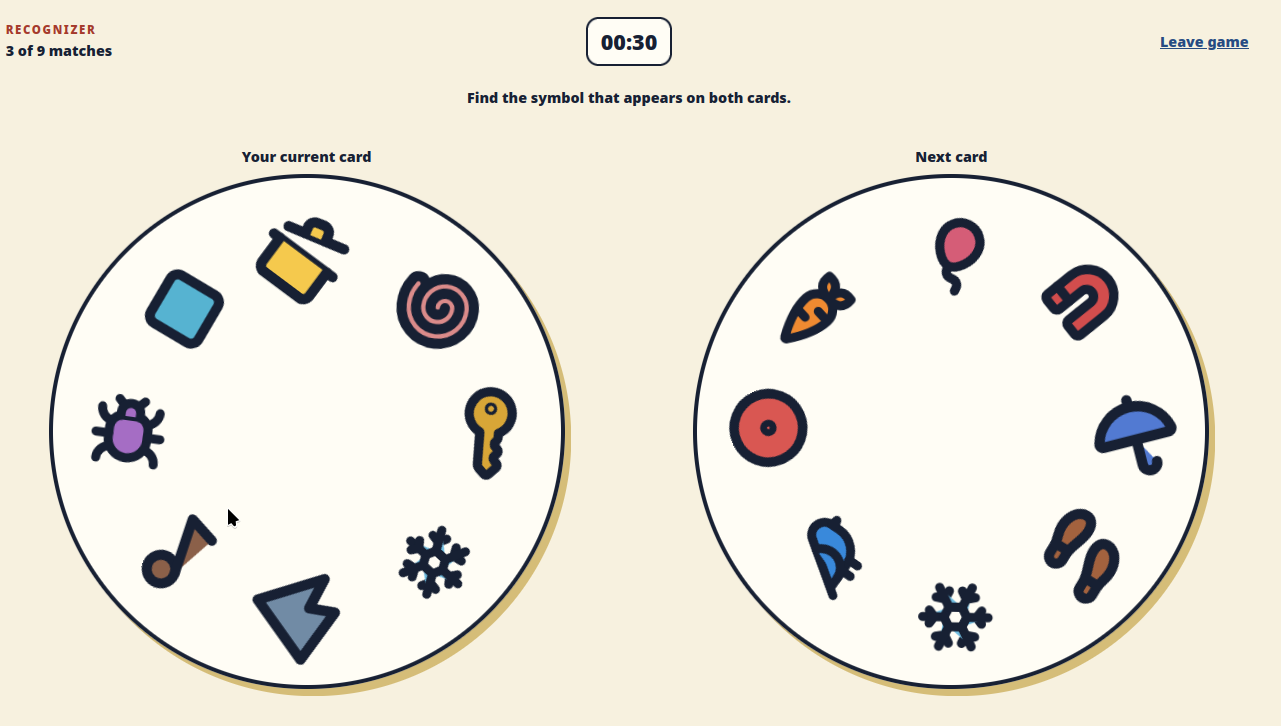
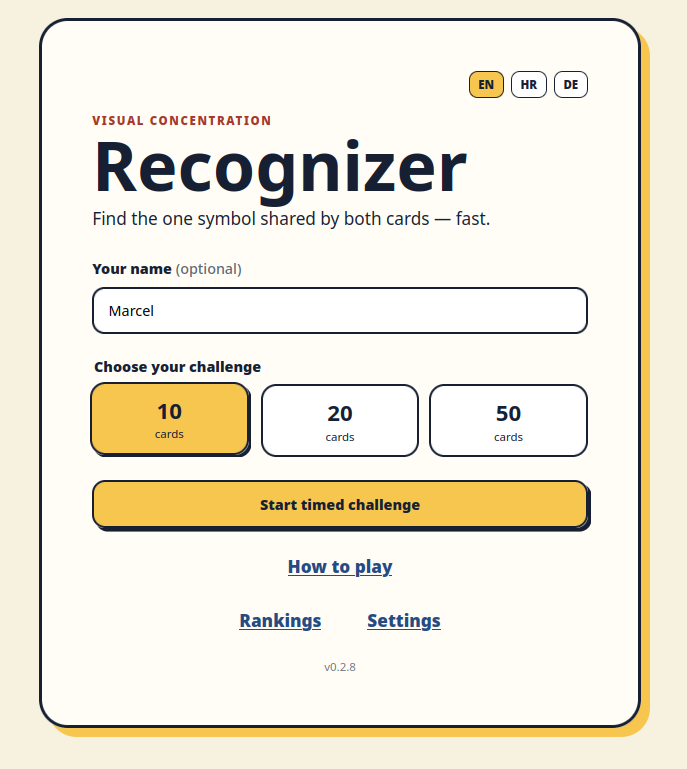
I like good turn-based offline games. Recently, the kids brought home one that I won’t name here because my GitHub Pages–backed browser game is a shameless copy.
If you want to play it (free and safe): https://marcelpetrick.github.io/recognizer/
𝗧𝗵𝗲 𝗿𝘂𝗹𝗲𝘀 𝘁𝗮𝗸𝗲 𝘁𝗲𝗻 𝘀𝗲𝗰𝗼𝗻𝗱𝘀 𝘁𝗼 𝗲𝘅𝗽𝗹𝗮𝗶𝗻: 𝘛𝘸𝘰 𝘤𝘢𝘳𝘥𝘴. 𝘌𝘪𝘨𝘩𝘵 𝘴𝘺𝘮𝘣𝘰𝘭𝘴 𝘦𝘢𝘤𝘩. 𝘌𝘹𝘢𝘤𝘵𝘭𝘺 𝘰𝘯𝘦 𝘮𝘢𝘵𝘤𝘩. 𝗙𝗶𝗻𝗱 𝘁𝗵𝗲 𝗺𝗮𝘁𝗰𝗵 𝗳𝗮𝘀𝘁𝗲𝗿 𝘁𝗵𝗮𝗻 𝘆𝗼𝘂𝗿 𝗺𝗮𝘁𝗲𝘀.
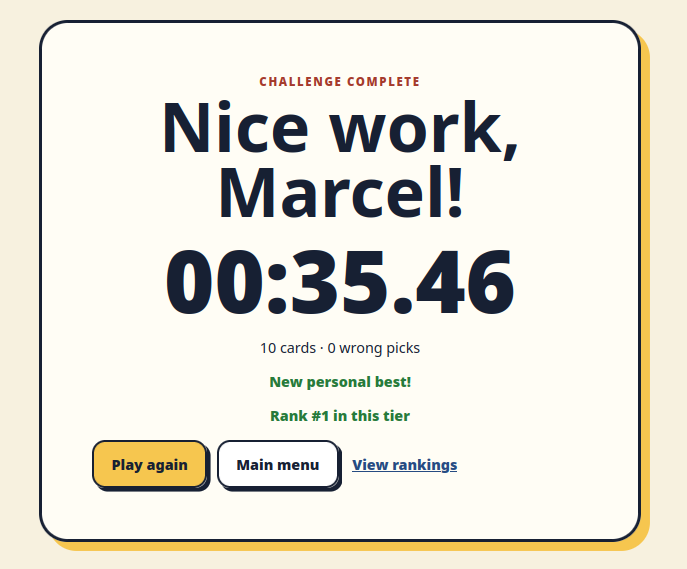
It is super simple, but pattern matching requires concentration, and you have to be quick. 𝗜𝘁’𝘀 𝗴𝗿𝗲𝗮𝘁 𝗳𝘂𝗻 𝗲𝘃𝗲𝗻 𝗮𝘀 𝗮 𝘀𝗶𝗻𝗴𝗹𝗲 𝗽𝗹𝗮𝘆𝗲𝗿 with a local high-score list.
Building it raised three useful questions:
* 𝗛𝗼𝘄 𝗱𝗼 𝘆𝗼𝘂 𝗴𝘂𝗮𝗿𝗮𝗻𝘁𝗲𝗲 that rule across all 𝟏,𝟓𝟗𝟔 possible card pairs?
* 𝗛𝗼𝘄 𝗱𝗼 𝘆𝗼𝘂 𝘁𝘂𝗿𝗻 a shared game into a good single-player challenge?
* 𝗛𝗼𝘄 𝗺𝘂𝗰𝗵 𝗶𝗻𝗳𝗿𝗮𝘀𝘁𝗿𝘂𝗰𝘁𝘂𝗿𝗲 does a small browser game actually need?
The mathematical part uses a finite projective plane. 𝗧𝗵𝗲 𝘁𝗲𝘀𝘁 𝘀𝘂𝗶𝘁𝗲 𝘃𝗲𝗿𝗶𝗳𝗶𝗲𝘀 𝗲𝘃𝗲𝗿𝘆 𝗽𝗼𝘀𝘀𝗶𝗯𝗹𝗲 𝗰𝗮𝗿𝗱 𝗽𝗮𝗶𝗿.
The product stays deliberately small: 10, 20, or 50 cards, a timer, and local high scores. 𝘕𝘰 𝘢𝘤𝘤𝘰𝘶𝘯𝘵𝘴. 𝘕𝘰 𝘨𝘭𝘰𝘣𝘢𝘭 𝘳𝘢𝘯𝘬𝘪𝘯𝘨𝘴. 𝘕𝘰 𝘣𝘢𝘤𝘬𝘦𝘯𝘥.
𝗔 𝘀𝗶𝗱𝗲 𝗻𝗼𝘁𝗲 𝗳𝗼𝗿 𝘁𝗵𝗼𝘀𝗲 𝗶𝗻𝘁𝗲𝗿𝗲𝘀𝘁𝗲𝗱 𝗶𝗻 𝘀𝗼𝗳𝘁𝘄𝗮𝗿𝗲 𝗱𝗲𝗹𝗶𝘃𝗲𝗿𝘆
I also used the project as a compact, end-to-end SDLC example: written requirements, scope, and acceptance criteria; separated and testable domain logic; versioned storage with migration handling; unit, component, browser, mobile, and accessibility tests; formatting, linting, type checking, and build gates; locked dependencies with automated updates; and repeatable PWA deployment through GitHub Actions and GitHub Pages.
𝐈𝐟 𝐲𝐨𝐮 𝐭𝐡𝐢𝐧𝐤 𝐲𝐨𝐮 𝐚𝐫𝐞 𝐪𝐮𝐢𝐜𝐤𝐞𝐫: 𝐩𝐥𝐚𝐲 𝐚𝐧𝐝 𝐩𝐨𝐬𝐭 𝐲𝐨𝐮𝐫 𝐬𝐜𝐨𝐫𝐞 🤗