marcelpetrick

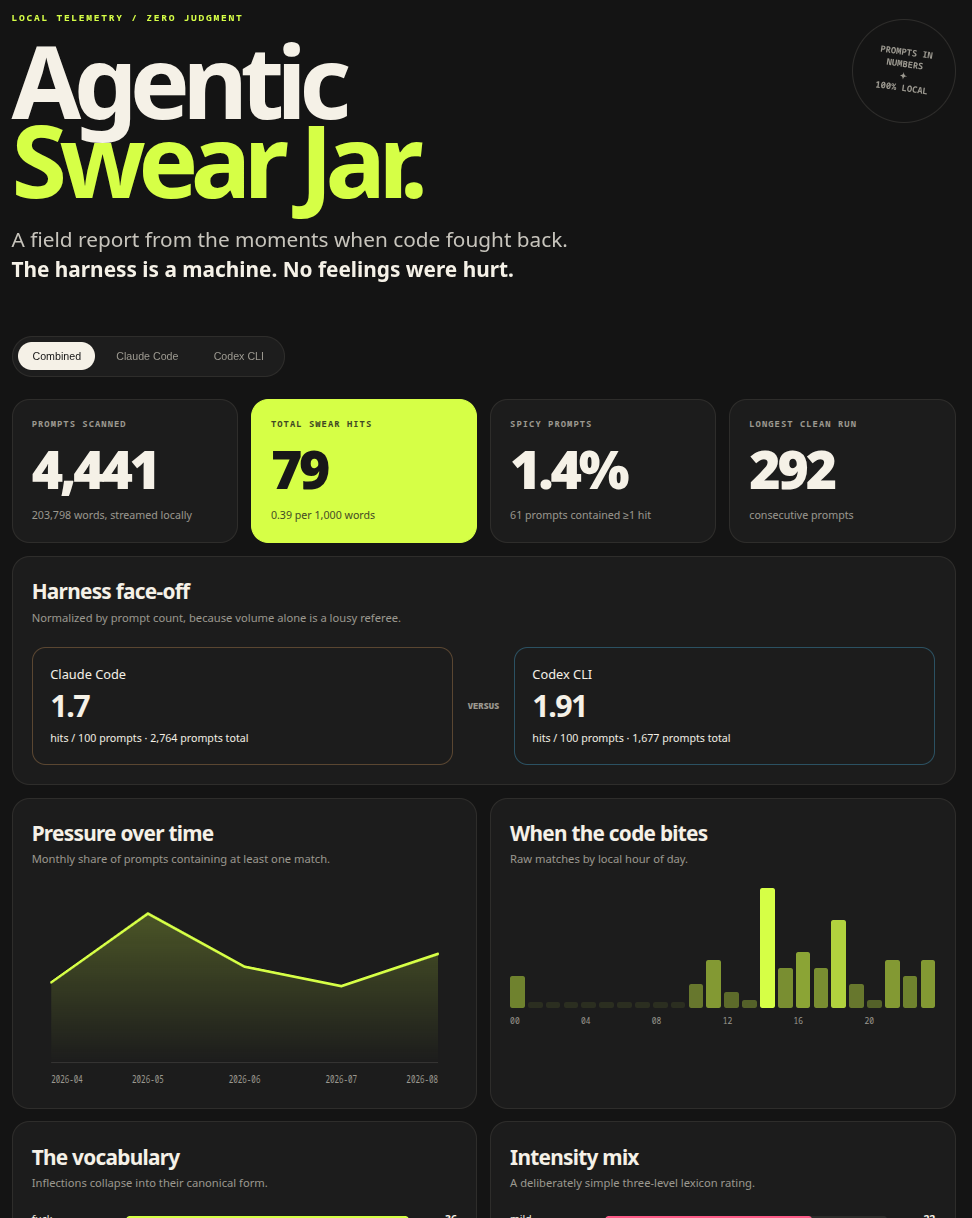
𝐎𝐧𝐥𝐲 𝟐% of my 𝐩𝐫𝐨𝐦𝐩𝐭𝐬 contain 𝐩𝐫𝐨𝐟𝐚𝐧𝐢𝐭𝐲
Testing Muse Glimmer lead to some frustration, so I started the next prompt with something I wouldn’t write professionally.
And this led to the question: how often do I do this? I would have guessed that 10% of my machine-human interactions contain some swear words.
But why guess when you can evaluate the data and produce hard facts?
Therefore I prepared 🫙 𝐀𝐠𝐞𝐧𝐭𝐢𝐜 𝐒𝐰𝐞𝐚𝐫 𝐉𝐚𝐫 as project on GitHub, which evaluates both your 𝐂𝐨𝐝𝐞𝐱 and 𝐂𝐥𝐚𝐮𝐝𝐞 𝐂𝐨𝐝𝐞 logs and gives you on the CLI a short two liner. And additionally you receive an HTML page in nice green IBM 3279-style. All locally, no AI or models involved, just some Python and HTML.
It will reveal to you how many swearwords were used, their frequency, streaks without swearing, which hour of the day the tension rises high, etc ..
What do you think? Anyone has a higher score to offer? Leave me a comment.
GitHub: https://github.com/marcelpetrick/AgenticSwearJar
PDF with full feature view:
Screenshot:
3/x: 𝐂𝐫𝐨𝐋𝐢𝐧𝐠𝐨: pipelines
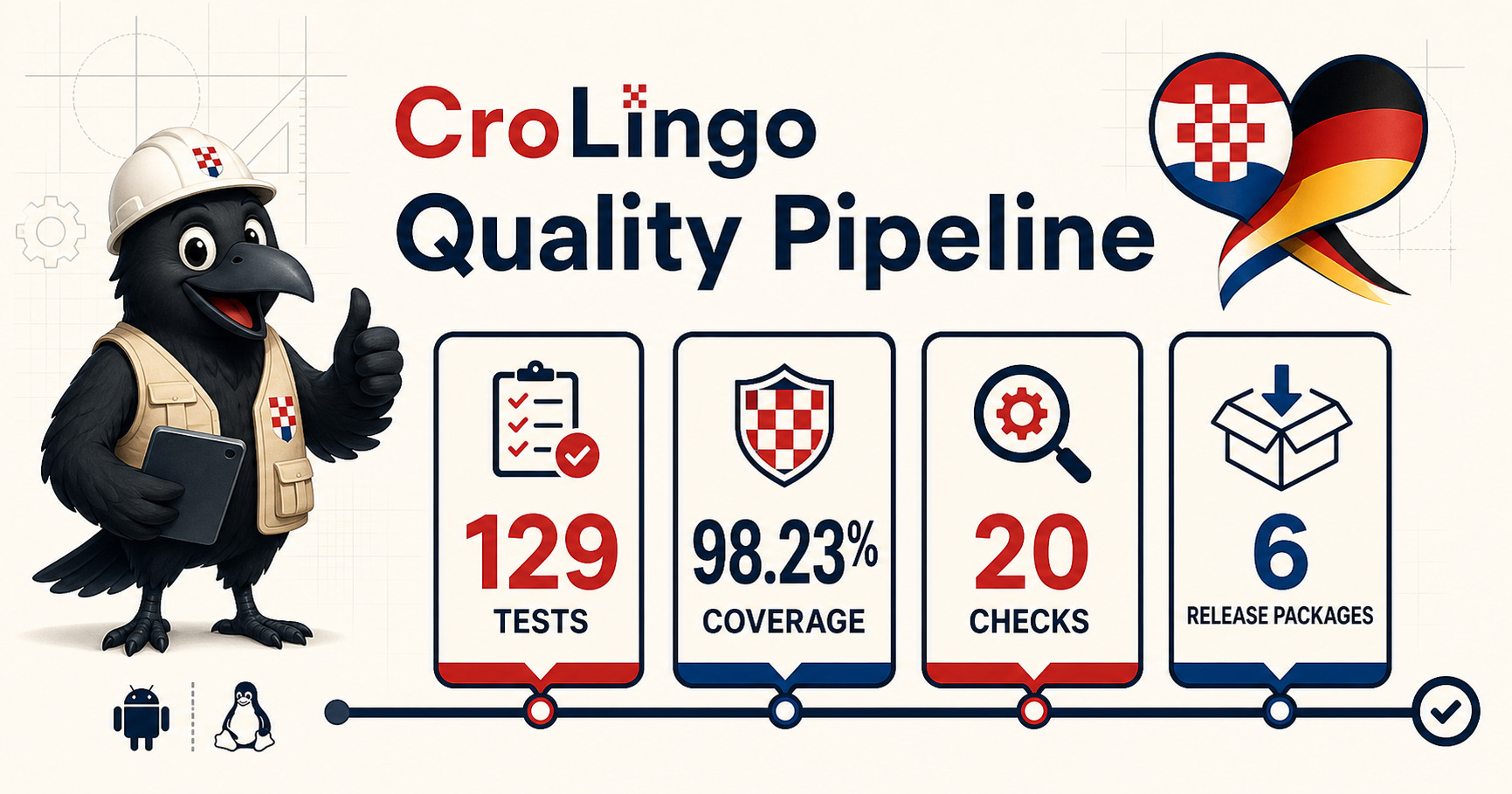
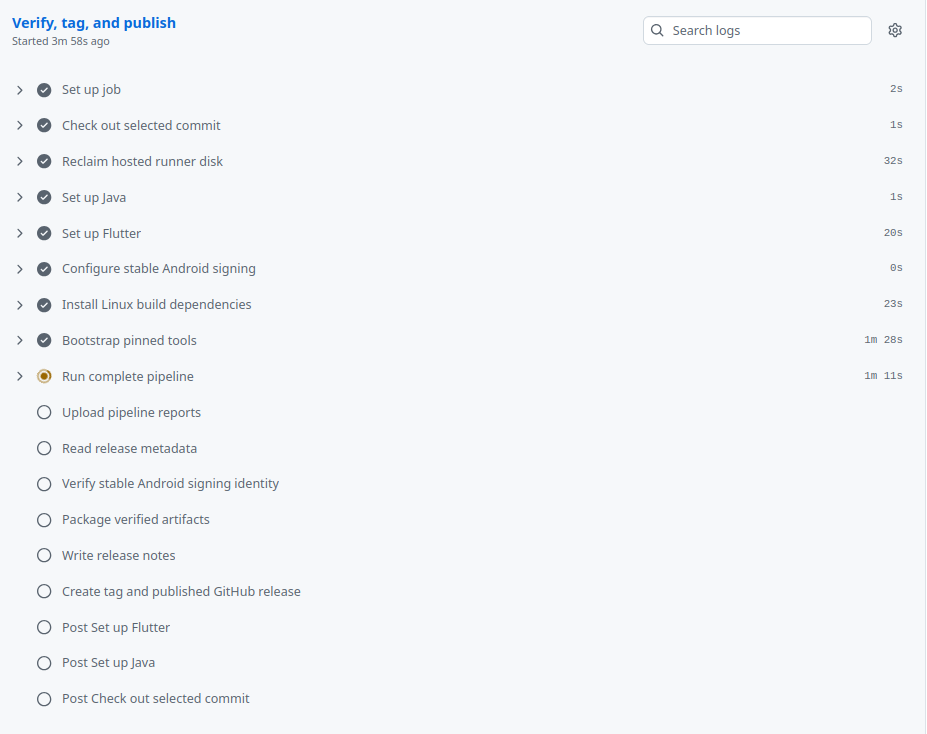
In a feature-driven world, support-software rarely gets the stage it deserves. Ask a stakeholder what a pipeline is and get 🙃 .. which is sad. Because how else do you want to verify it you built it correctly?
Anyway: automated testing and linting is always part of my process. From day one – not in the final stages. Of course, you should have at least a tiny build-able fragment of your project, but the earlier you add #automation, the better. I usually run with local and continuous integration pipelines.
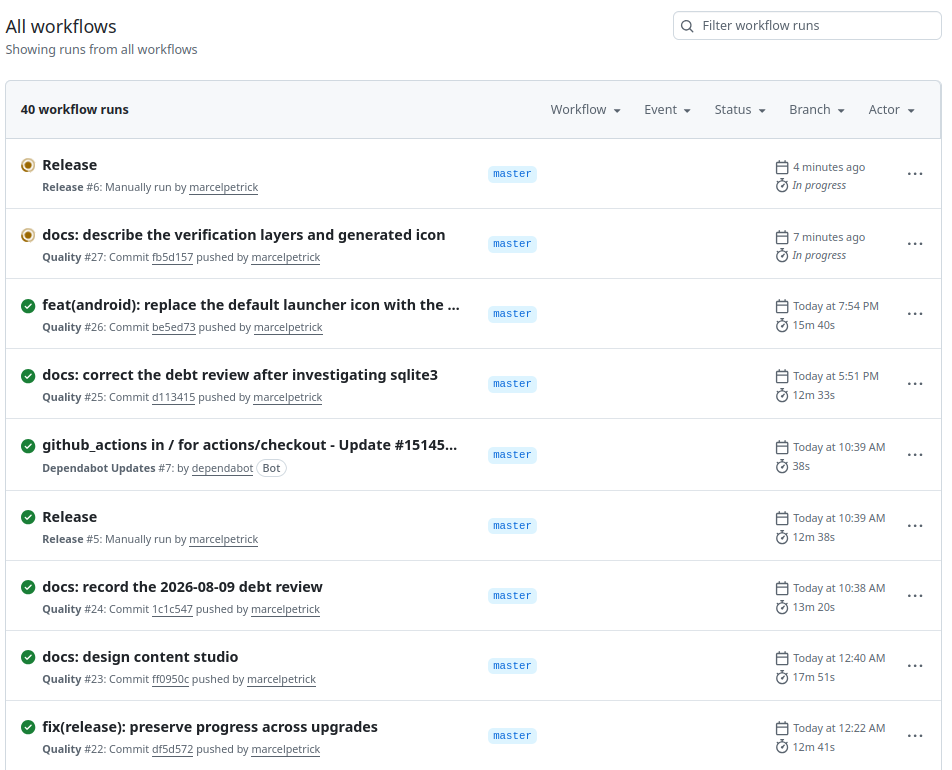
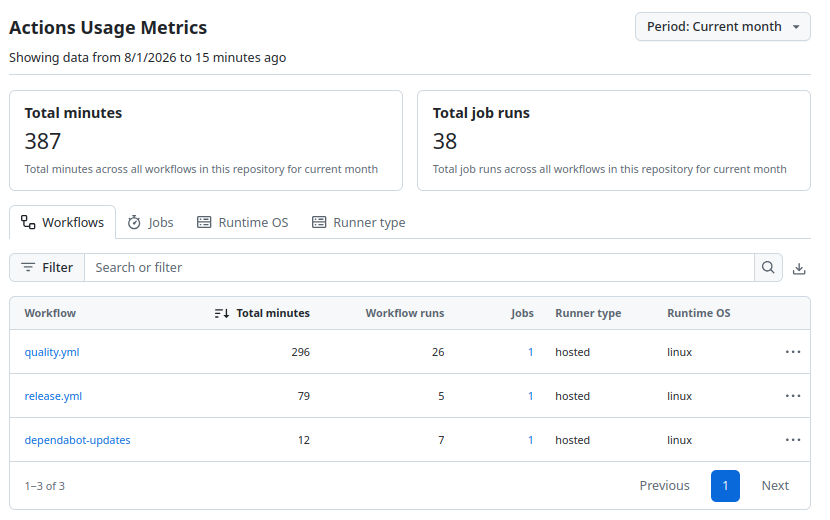
This project is hosted on GitHub, so I went with GitHub actions for the CI. We have 20 named pipeline stages which form a single commit gate. “Cheap” ones like linting and format checks run before the more “expensive” ones, which need a build. 129 automated tests are done, which cover 98% of the code. Together with the 30 unit and widget tests and a real-target integration suite we have fitting coverage. The local version runs as pre-commit hook, the GitHub one is also capable of doing the releases. And so far I made six public releases.
Also, Dependabot is integrated, so if I would miss the release of any dependency, then this neat little bot would create an automatic PR (pull-request) for me. 🐦⬛
The pipeline turns engineering expectations into executable policy. 𝐈𝐭 𝐰𝐨𝐧’𝐭 𝐛𝐮𝐢𝐥𝐝 𝐨𝐫 𝐩𝐚𝐬𝐬, 𝐲𝐨𝐮 𝐜𝐚𝐧’𝐭 𝐫𝐞𝐥𝐞𝐚𝐬𝐞. 𝐒𝐢𝐦𝐩𝐥𝐞 𝐚𝐬 𝐭𝐡𝐚𝐭.
If you want to give this Croatian-German-language learning app a try, download the package from https://github.com/marcelpetrick/CroLingo/releases/tag/v0.0.63 and run it on your Android phone.
Have fun and enjoy learning!
I’ll keep you updated on what comes next. 🇭🇷 ❤️ 🇩🇪
#continuousIntegration #continuousDeployment #pipelines #automation
2/x: 𝐂𝐫𝐨𝐋𝐢𝐧𝐠𝐨
As written, I had started to gather all ideas and document what we want. Of course, there exist magic tools which transform unstructured input into well-defined #requirements and which help you to make them conflict-free, unambiguous, atomic, feasible and verifiable. Yada yada, you know the drill.
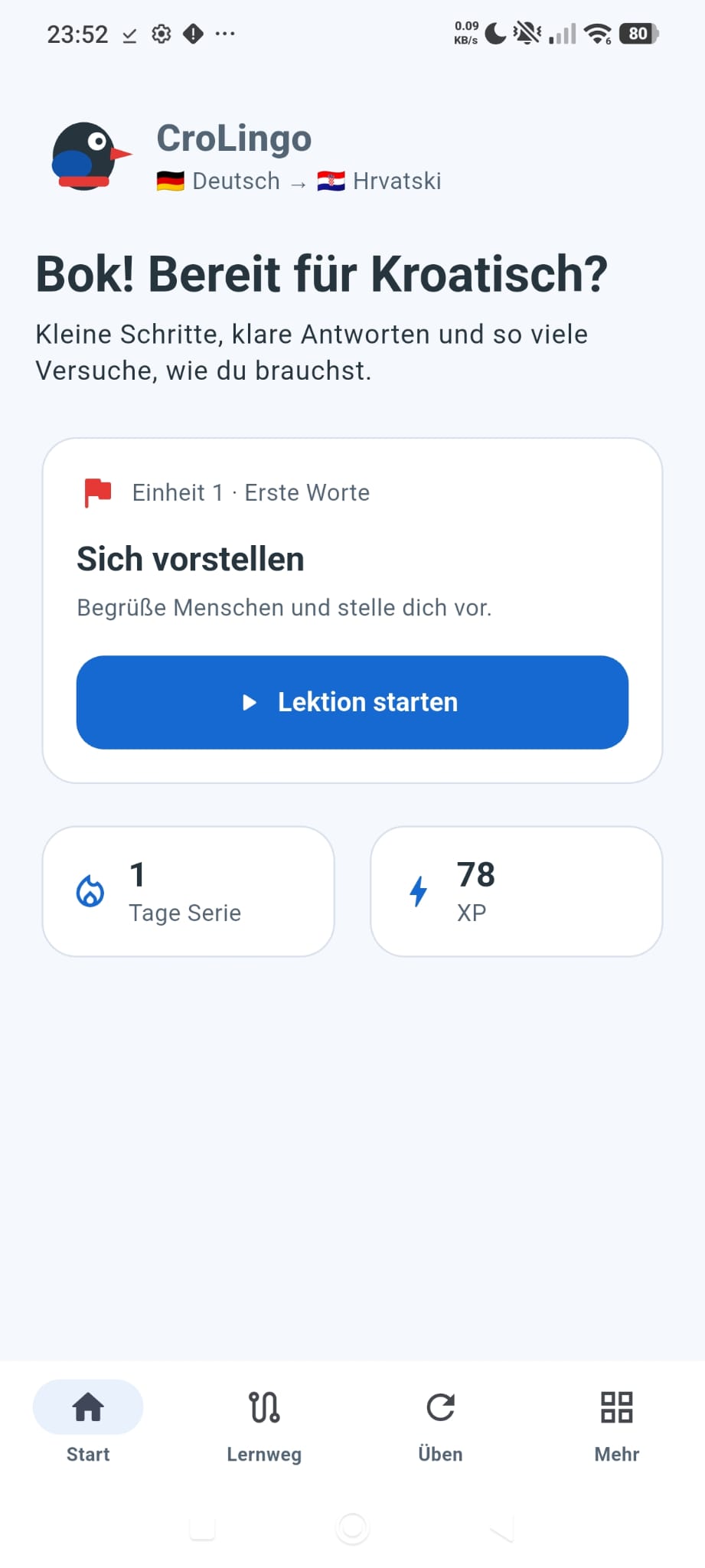
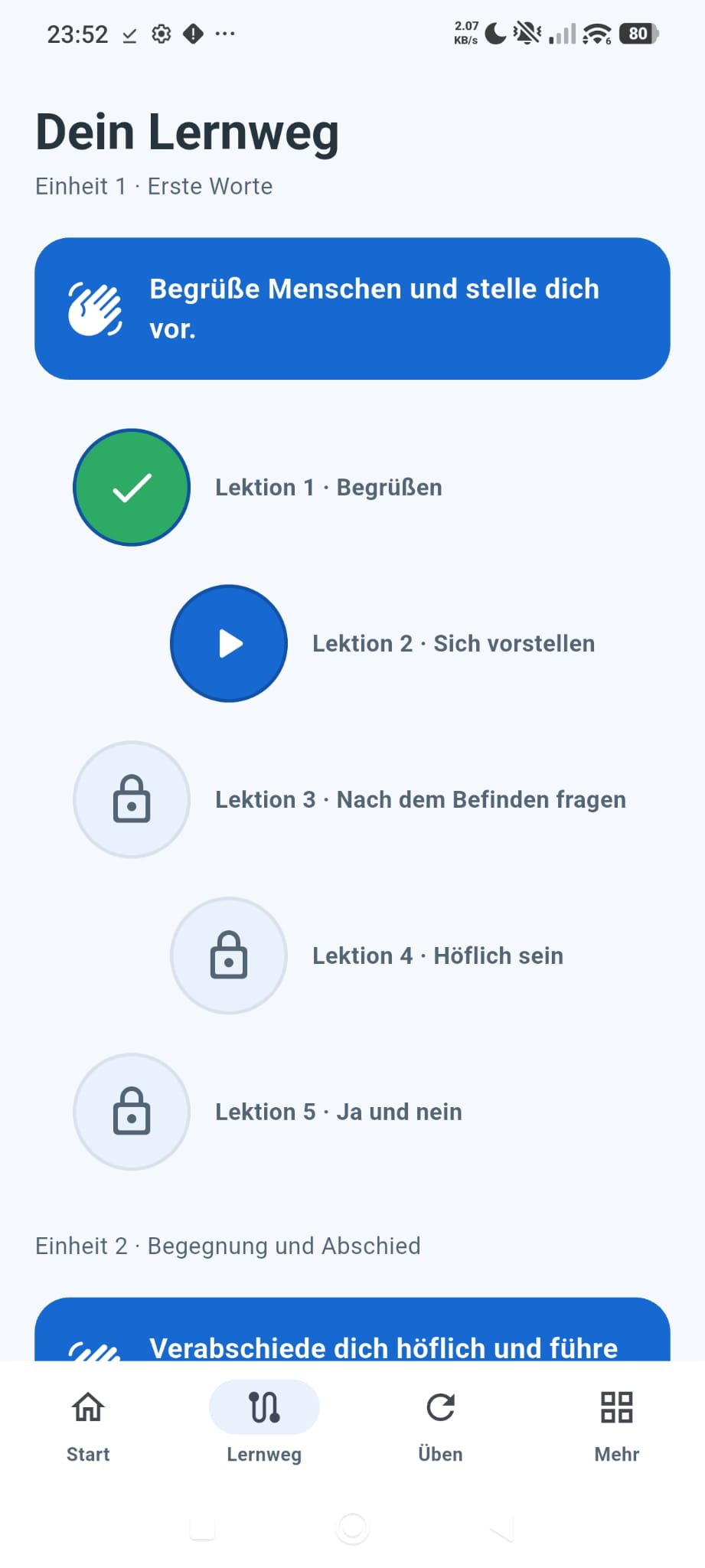
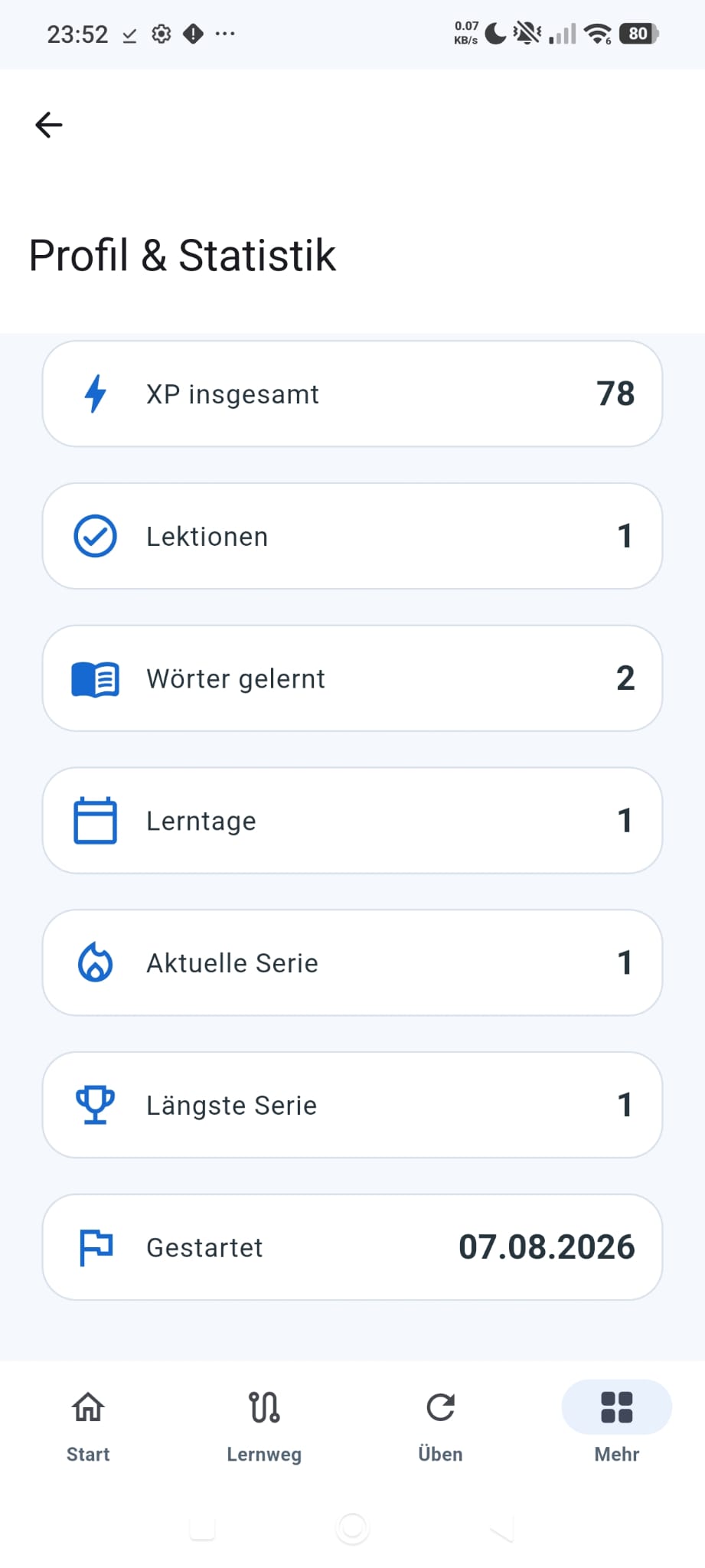
Then the development started, and we have a first #MVP (minimum viable product) now, as an Android release package and Linux Desktop build. The first content has been added, so the first user feedback could be gathered today. I have to admit, offering an app with well-known competitors yields a lot of “oh, but here it should behave like this” … anyway, input from the target audience is really dear to me. So we now have plenty more things to implement and some to adjust. But we did not experience a single crash or logic deadlock.
✨ 𝐀𝐧𝐝 𝐬𝐨𝐦𝐞 𝐮𝐬𝐞𝐫𝐬 𝐜𝐨𝐮𝐥𝐝 𝐚𝐥𝐫𝐞𝐚𝐝𝐲 𝐥𝐞𝐚𝐫𝐧 𝐬𝐨𝐦𝐞 𝐧𝐞𝐰 𝐰𝐨𝐫𝐝𝐬. ✨
I’ve added on-device screenshots from one of the recent builds. If you want the hands-on experience, go to https://github.com/marcelpetrick/CroLingo/releases/tag/v0.0.40
I’ll keep you updated on what comes next. 🇭🇷 ❤️ 🇩🇪
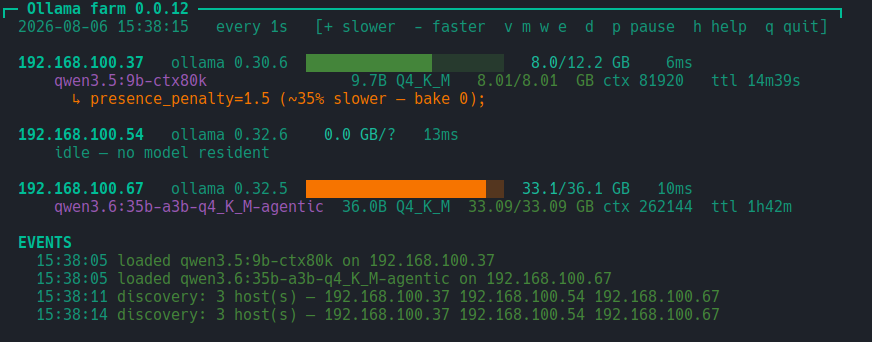
🦙 Release: 𝐎𝐥𝐥𝐚𝐦𝐚𝐅𝐚𝐫𝐦 ✨
Recently I had the need to monitor all the locally available #Ollama instances. Of course, you can 𝘤𝘶𝘳𝘭 yourself, but why not have a tool in the history of btop/abtop ..
Only one 𝘴𝘩𝘦𝘭𝘭 script utilizing 𝘤𝘶𝘳𝘭, 𝘢𝘸𝘬 and 𝘫𝘲. The name is the architecture: one llama is a pet, several across machines is a farm.
Tons of hotkeys to change update frequency, re-discovery of servers, probing their VRAM, cycling color themes. GitHub Actions ensure high quality code.
So give it a try and/or write a better version, #GPLv3 allows it: https://github.com/marcelpetrick/ollamaFarm/
Ollama Farmer out 🧑🏻🌾🦙
New project: 𝐂𝐫𝐨𝐋𝐢𝐧𝐠𝐨 🇭🇷🇩🇪
Just wanted to share that I started the design and implementation of an app for learning Croatian.
The market for language-learning apps does not offer the combination I need, so it is time to roll our own custom software.
Also a playground for #Flutter and #Dart, since I have so far only used Kotlin for Android apps. And it will run on x86_64 Linux desktops as well. Maybe I’ll do an iOS version too.
Most of the preliminary work was spent on the design and concept. #Ideation is quite important in the age of agentic AI.
Of course, I will avoid writing code and keep you updated 😉

Final evaluation
The World Cup is over — actually for quite a while, but I never had the time to do the final evaluation. Outcome was fifth place (yes, from second to fifth), because those two missing entries really made me leave 7-9 points on the table (on average), which could have yielded a second or third place.
I will re-invest the gained 18€ into pizza for the team and use it for some discussions about morality (is agentic resolution allowed for such games?).
And I won: my initial goal of fetching back my investment of the starter fee was met. Good.
And I learnt how to orchestrate agents to solve non-SW-development tasks.
#agenticAI
𝐓𝐡𝐞 𝐟𝐢𝐫𝐬𝐭 𝐠𝐚𝐦𝐞 𝐦𝐲 𝐤𝐢𝐝𝐬 𝐚𝐩𝐩𝐫𝐨𝐯𝐞𝐝
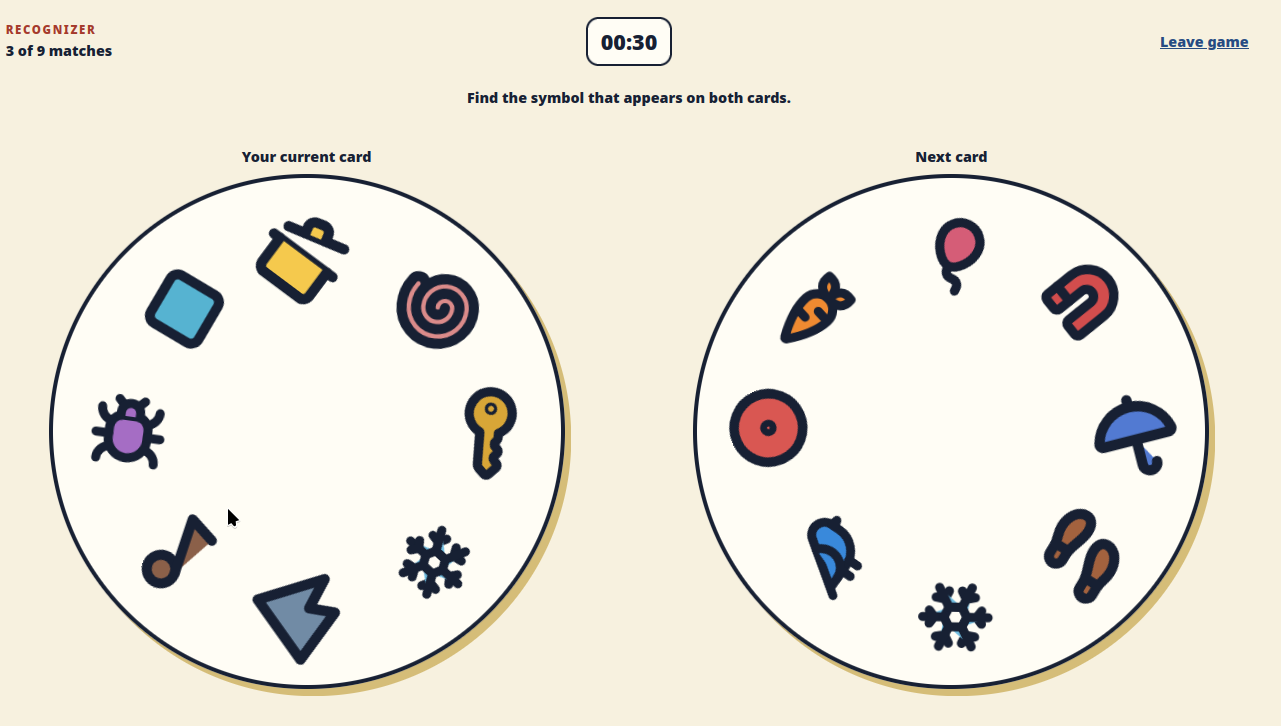
I like good turn-based offline games. Recently, the kids brought home one that I won’t name here because my GitHub Pages–backed browser game is a shameless copy.
If you want to play it (free and safe): https://marcelpetrick.github.io/recognizer/
𝗧𝗵𝗲 𝗿𝘂𝗹𝗲𝘀 𝘁𝗮𝗸𝗲 𝘁𝗲𝗻 𝘀𝗲𝗰𝗼𝗻𝗱𝘀 𝘁𝗼 𝗲𝘅𝗽𝗹𝗮𝗶𝗻: 𝘛𝘸𝘰 𝘤𝘢𝘳𝘥𝘴. 𝘌𝘪𝘨𝘩𝘵 𝘴𝘺𝘮𝘣𝘰𝘭𝘴 𝘦𝘢𝘤𝘩. 𝘌𝘹𝘢𝘤𝘵𝘭𝘺 𝘰𝘯𝘦 𝘮𝘢𝘵𝘤𝘩. 𝗙𝗶𝗻𝗱 𝘁𝗵𝗲 𝗺𝗮𝘁𝗰𝗵 𝗳𝗮𝘀𝘁𝗲𝗿 𝘁𝗵𝗮𝗻 𝘆𝗼𝘂𝗿 𝗺𝗮𝘁𝗲𝘀.
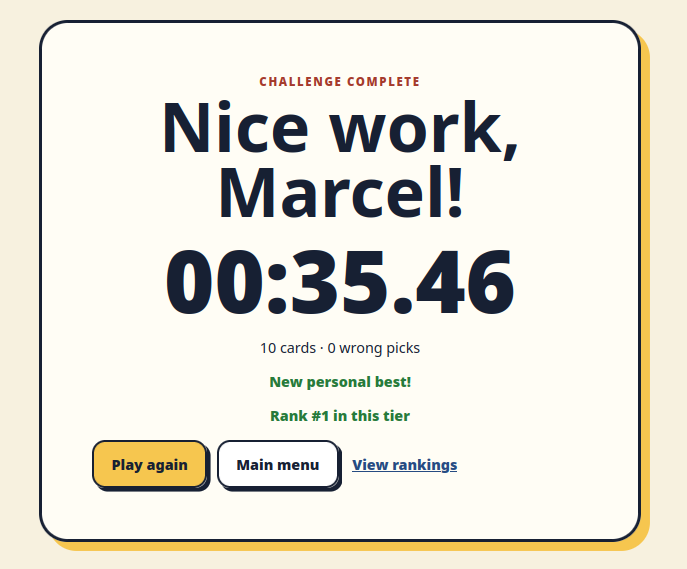
It is super simple, but pattern matching requires concentration, and you have to be quick. 𝗜𝘁’𝘀 𝗴𝗿𝗲𝗮𝘁 𝗳𝘂𝗻 𝗲𝘃𝗲𝗻 𝗮𝘀 𝗮 𝘀𝗶𝗻𝗴𝗹𝗲 𝗽𝗹𝗮𝘆𝗲𝗿 with a local high-score list.
Building it raised three useful questions:
* 𝗛𝗼𝘄 𝗱𝗼 𝘆𝗼𝘂 𝗴𝘂𝗮𝗿𝗮𝗻𝘁𝗲𝗲 that rule across all 𝟏,𝟓𝟗𝟔 possible card pairs?
* 𝗛𝗼𝘄 𝗱𝗼 𝘆𝗼𝘂 𝘁𝘂𝗿𝗻 a shared game into a good single-player challenge?
* 𝗛𝗼𝘄 𝗺𝘂𝗰𝗵 𝗶𝗻𝗳𝗿𝗮𝘀𝘁𝗿𝘂𝗰𝘁𝘂𝗿𝗲 does a small browser game actually need?
The mathematical part uses a finite projective plane. 𝗧𝗵𝗲 𝘁𝗲𝘀𝘁 𝘀𝘂𝗶𝘁𝗲 𝘃𝗲𝗿𝗶𝗳𝗶𝗲𝘀 𝗲𝘃𝗲𝗿𝘆 𝗽𝗼𝘀𝘀𝗶𝗯𝗹𝗲 𝗰𝗮𝗿𝗱 𝗽𝗮𝗶𝗿.
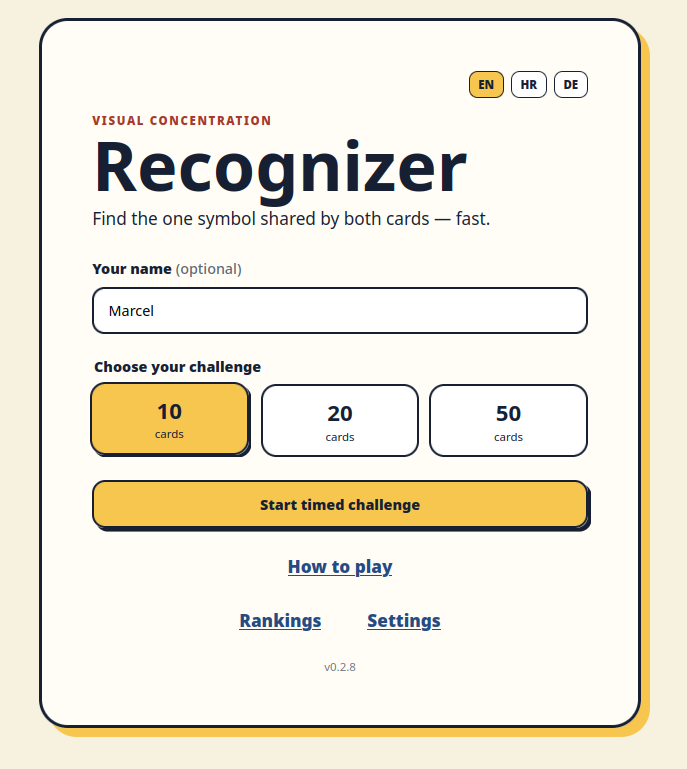
The product stays deliberately small: 10, 20, or 50 cards, a timer, and local high scores. 𝘕𝘰 𝘢𝘤𝘤𝘰𝘶𝘯𝘵𝘴. 𝘕𝘰 𝘨𝘭𝘰𝘣𝘢𝘭 𝘳𝘢𝘯𝘬𝘪𝘯𝘨𝘴. 𝘕𝘰 𝘣𝘢𝘤𝘬𝘦𝘯𝘥.
𝗔 𝘀𝗶𝗱𝗲 𝗻𝗼𝘁𝗲 𝗳𝗼𝗿 𝘁𝗵𝗼𝘀𝗲 𝗶𝗻𝘁𝗲𝗿𝗲𝘀𝘁𝗲𝗱 𝗶𝗻 𝘀𝗼𝗳𝘁𝘄𝗮𝗿𝗲 𝗱𝗲𝗹𝗶𝘃𝗲𝗿𝘆
I also used the project as a compact, end-to-end SDLC example: written requirements, scope, and acceptance criteria; separated and testable domain logic; versioned storage with migration handling; unit, component, browser, mobile, and accessibility tests; formatting, linting, type checking, and build gates; locked dependencies with automated updates; and repeatable PWA deployment through GitHub Actions and GitHub Pages.
𝐈𝐟 𝐲𝐨𝐮 𝐭𝐡𝐢𝐧𝐤 𝐲𝐨𝐮 𝐚𝐫𝐞 𝐪𝐮𝐢𝐜𝐤𝐞𝐫: 𝐩𝐥𝐚𝐲 𝐚𝐧𝐝 𝐩𝐨𝐬𝐭 𝐲𝐨𝐮𝐫 𝐬𝐜𝐨𝐫𝐞 🤗
𝐂𝐥𝐨𝐮𝐝 𝐀𝐏𝐈𝐬 𝐚𝐫𝐞 𝐞𝐱𝐩𝐞𝐧𝐬𝐢𝐯𝐞. 𝐖𝐚𝐭𝐞𝐫𝐦𝐞𝐥𝐨𝐧 𝐢𝐬 𝐧𝐨𝐭. 🍉
Vision models grow in their capabilities while the execution demands way fewer resources.
Means: my sales slip scanner-project from two years ago needed an upgrade. Before I was using GPT-4 Vision via the @OpenAI API, which costs you control over your data and a few cents for every analysis.
Now, after intensive benchmarking across a range of 15 models (with 𝐎𝐥𝐥𝐚𝐦𝐚) and some surprising regressions (newer harness doesn’t mean the models execute faster; it can also mean they suddenly run into model load errors…), I put my money on 𝐐𝐰𝐞𝐧𝟑.𝟓:𝟒𝐁. A casual language model with a 𝐯𝐢𝐬𝐢𝐨𝐧 𝐞𝐧𝐜𝐨𝐝𝐞𝐫. My own benchmark over the selected models against the huge sample size of three receipts: all three were successfully evaluated. 😉
Then I built a 𝐡𝐨𝐭-𝐟𝐨𝐥𝐝𝐞𝐫-𝐜𝐨𝐧𝐜𝐞𝐩𝐭 around the script, and it works (thank you @Mr Zahorsky — without whom I would have never come across that idea). For instance: in less than ten seconds, 13 samples were processed, and you get the result sum plus a fancy HTML overview for comparison.
𝐃𝐚𝐭𝐚 𝐞𝐧𝐭𝐫𝐲 can be done for cheap: give the kids the smartphone, snap all receipts, throw out some watermelon slices 🍉😉
If you want to run the tool as well, check my GitHub: https://github.com/marcelpetrick/sales-slip-scanner-ng. As said: a local GPU is the only thing you need; 𝐧𝐨 𝐜𝐥𝐨𝐮𝐝, 𝐧𝐨 𝐀𝐏𝐈 𝐤𝐞𝐲𝐬, 𝐧𝐨 𝐜𝐫𝐞𝐝𝐢𝐭 𝐜𝐚𝐫𝐝. Everything is now self-hosted. You’ll also find the benchmark of the vision models there, including the results.
𝐓𝐡𝐞 𝐛𝐢𝐠 𝐪𝐮𝐞𝐬𝐭𝐢𝐨𝐧 𝐢𝐬: 𝐰𝐡𝐚𝐭 𝐬𝐡𝐨𝐮𝐥𝐝 𝐈 𝐚𝐮𝐭𝐨𝐦𝐚𝐭𝐞 𝐧𝐞𝐱𝐭 𝐰𝐢𝐭𝐡 𝐚 𝐥𝐨𝐜𝐚𝐥 𝐯𝐢𝐬𝐢𝐨𝐧 𝐦𝐨𝐝𝐞𝐥? 𝐖𝐡𝐚𝐭 𝐰𝐨𝐮𝐥𝐝 𝐲𝐨𝐮 𝐝𝐨?
#neverstoplearning


𝗜 𝗥𝗮𝗻 𝗮 𝟮𝟳𝗕 𝗠𝗼𝗱𝗲𝗹 𝗼𝗻 𝗮𝗻 𝟴𝗚𝗕 𝗚𝗣𝗨.
𝟰𝟬 𝗺𝗶𝗻𝘂𝘁𝗲𝘀. That’s all it took me to get Bonsai 27B running locally on an RTX A2000 Laptop GPU with just 8GB of VRAM.
Bonsai 27B is based on Qwen 3.6, but uses PrismML’s custom native 𝟏-𝐛𝐢𝐭 𝐁𝐨𝐧𝐬𝐚𝐢 format, reducing the model to just 3.9GB. A specialized 𝐥𝐥𝐚𝐦𝐚.𝐜𝐩𝐩 fork implements custom CUDA kernels for the 1-bit inference path, making it possible to run the model directly on an 8GB GPU. The runtime exposes an OpenAI-compatible API, so existing tools and agents work without modification.
Performance is a different topic: 15 down to 9 tokens/s.
If you want to give it a try: find my notes and setup-scripts at GitHub: https://github.com/marcelpetrick/codingWithGPT/tree/master/bonsaiTestrun

𝐌𝐲 𝐚𝐩𝐩𝐬 𝐚𝐫𝐞 𝐧𝐨𝐭 𝐚𝐛𝐚𝐧𝐝𝐨𝐧𝐰𝐚𝐫𝐞!
Yesterday, #RitterRadar got some updates: first, all dependencies were refreshed (no more CVEs); then I fixed some bugs I had noticed over the past few weeks; and finally, the best news: a new feature that gives you a copyable list of the events matching your current filter.
So, for instance, if you live near Potsdam and want to see all medieval events within 50 km over the next two months – you get this:
——-
04. Juli 2026 | Kinder- und Sommerfest in Gannahall 2026 | 14641 Nauen (26 km)
04. Juli 2026 – 05. Juli 2026 | Mythologie und Handwerk des Mittelalters 2026 | 15569 Woltersdorf (47 km)
22. Aug. 2026 – 23. Aug. 2026 | Sommerfest Lübarser Hofkulturdiverse Konzerte | 13469 Berlin (30 km)
29. Aug. 2026 | Mittelalterliches zum Ackerbürgerfest | 14641 Nauen (26 km)
——-
#FastAPI #WebScraping #OpenStreetMap #Geocoding #OpenSource #EventDiscovery
URL to the GitHub-project: https://github.com/marcelpetrick/RitterRadar if you haven’t given it a try yet ⚔️🐉
